If you have been to our office on Louisa Avenue recently, you have already noticed that the rooms look different. Mineral Dental Care renovated the office at the same address. This post is for families in Mineral, Louisa and around Lake Anna who want to know what changed and what a visit looks like now. If you would rather see it than read about it, the one-minute office tour on our About page walks you through the rooms.
What changed in the renovation at Mineral Dental Care?
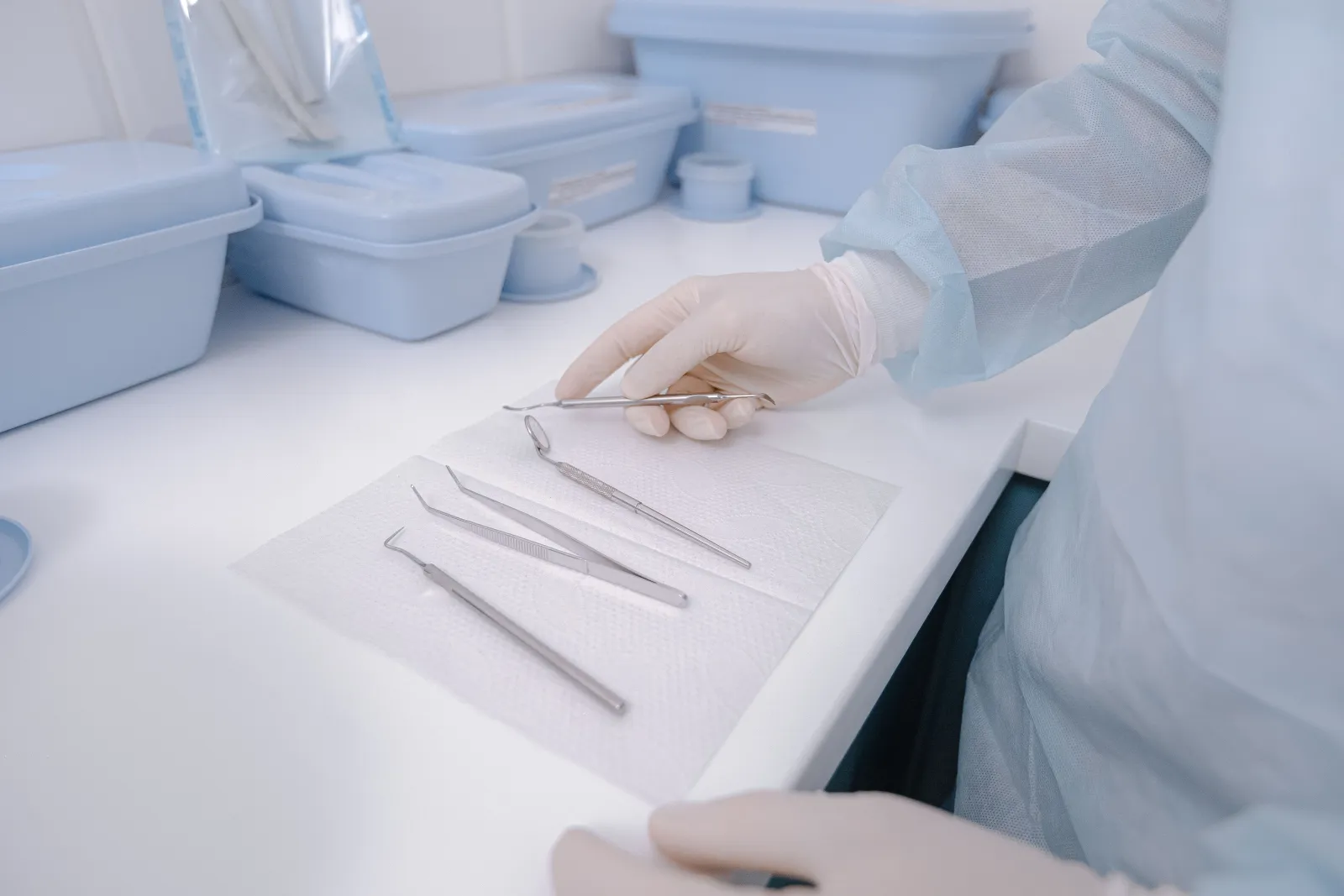
The tour, filmed in the office, starts at the front desk, where you check in, and moves through the waiting area. From there it walks into the new treatment rooms, where the exam, the cleaning and any treatment take place. It ends in two rooms that patients rarely see: the sterilization area, where instruments are cleaned between patients, and the 3D X-ray room.
We are still at 121 Louisa Ave, our phone number is still (540) 894-5700, and the practice has been open since 2015.
What does a first visit at Mineral Dental Care look like now?
A first visit takes about an hour, so plan your drive in from Louisa or the lake around that. Bring your insurance card if you have one, and a list of any medicines you take, because both shape the visit. We work with Medicaid and many other insurance plans, and if you are not sure about yours, call and we'll check your plan. Our team speaks English, Spanish and Arabic. Hablamos español.
In the treatment room, the first visit includes four things:
- A full exam by the doctor, covering your teeth and gums and including an oral cancer screening.
- X-rays, photos or a digital scan; for the scan, a small wand passes over your teeth and records their shape on a screen.
- A sit-down conversation with the doctor, where you hear what the doctor found and what your options are.
- A written treatment plan, with costs explained before any work starts, so you can decide with the numbers in front of you.
If you feel nervous about any of this, you are far from alone, and the practice has put its approach in its own words:
"We know that many people feel nervous about visiting the dentist. That's why we take extra time to listen, explain every step, and move at a pace that feels comfortable for you."
The treatment rooms have TVs, and you can ask for headphones or music, a blanket or a pillow. Nitrous oxide (laughing gas) and extra-gentle numbing are also available if you want them.
We see children from age 3, and cleanings, checkups and care for the whole family are on our general and family dentistry page.
How are dental instruments cleaned and sterilized between patients?
Sterilization happens in a room most patients never walk into, so it is the part of a visit people know least about. The tour shows that room near the end. Here is what the CDC's guidance on sterilization in dental offices asks every dental office to do.
The CDC sorts dental items by what they touch, and the rule for each group follows from that. Instruments that go into gum or bone, such as the scalers used in a cleaning, should always go through heat sterilization. Most items that only touch the inside of the mouth can take heat as well, so the CDC says to heat-sterilize those too. The handpiece, the small drill, should be heat-sterilized between patients, not just wiped down.
The guidance sets a fixed order, and each step exists for a physical reason:
-
Cleaning comes first, because heat kills germs only where it reaches them, and dried blood or debris can shelter germs underneath. An ultrasonic cleaner or instrument washer removes that film before anything else happens.
-
Next, the instruments are dried, checked and sealed in pouches, each with a chemical indicator inside. The indicator is a strip that changes color once heat has reached inside the pouch. The label records which sterilizer ran it, the load number and the date.
-
Then the sterilizer runs a heat cycle, and the CDC calls for a check of its gauges, display or printout. That check confirms the cycle reached the right temperature, pressure and time.
-
A spore test checks the sterilizer itself at least once a week. A strip of bacterial spores, chosen because they are very hard to kill, goes through a normal cycle and then into an incubator. If nothing grows, the cycle was strong enough for the weaker germs on a used instrument.
-
Last, sterile pouches wait in closed cabinets until they are needed. Items made for single use go to one patient and are then thrown away.
The CDC's summary of dental infection control says it is rare for germs to pass between patients in a dental office, but it has happened. The breakdowns named in those reports included handpieces that were not heat-sterilized between patients and sterilizers that were not spore-tested. The sterilization area in our tour is the room for this work, and you are welcome to ask about any step at your visit.
What is the 3D X-ray room used for?
A regular dental X-ray is flat, so it shows the height of the bone and the outline of the roots in a single plane. It cannot show how wide the jaw is, or exactly where a nerve runs inside it.
A 3D X-ray, called cone beam CT or CBCT, works differently. According to the FDA, the machine rotates around your head with a cone-shaped X-ray beam. A computer then builds those images into a 3D picture of the teeth and jaw. Dental implant planning is one of the uses the FDA lists.
Before an implant goes in, the dentist needs to know whether there is enough bone to hold it and where the nerve and sinus sit. The 3D picture answers both questions before any work starts. We place and restore dental implants here in Mineral, so the planning and the treatment happen in the same office.
The FDA notes that a CBCT exam typically delivers more radiation than a regular dental X-ray. The FDA and the American Dental Association recommend dental X-rays, CBCT included, only when they are needed for diagnosis or treatment. So a 3D X-ray belongs to questions like implant planning, not to a routine checkup.
How do I book a visit at the renovated office?
Call us at (540) 894-5700 or use the contact page to set up a first visit or ask a question. The office is open Monday to Thursday from 9 to 5 and Friday from 8 to 3, at 121 Louisa Ave in Mineral.