Gum Disease Treatment in Mineral, VA
Deep cleanings and follow-up care for gum disease, done in our office.
or call (540) 894-5700
What Gum Disease Treatment Involves
Gum disease (also called periodontal disease) starts when plaque, a sticky film of bacteria, stays along the gumline. Plaque hardens into tartar, which brushing cannot remove, and the bacteria under it leave gums red, swollen and likely to bleed. If it continues, the gums pull away from the tooth to form pockets, and the bone that holds the tooth can wear down.
How a Deep Cleaning Works
A deep cleaning (scaling and root planing) goes below the gumline, where a regular cleaning does not reach. We scrape tartar and bacteria off the roots and smooth them, so the gums can heal against a clean surface. Many patients find their gums bleed less in the weeks after treatment.
Signs of Gum Disease: Who It’s For
You may want a gum check if you notice…
- gums that bleed when you brush or floss
- gums that look red, swollen or feel tender
- bad breath or a bad taste that does not go away
- gums that look like they are pulling back from your teeth
- teeth that feel loose or seem to have shifted position
Gum disease often does not hurt in its early stages, so many people do not notice it. It is common, and genetics, medications and health conditions all play a part, so it is not a sign that you did something wrong.
We do not do gum surgery here. If an exam shows you need it, we will say so plainly and refer you to a specialist. Many cases respond to a deep cleaning and follow-up care without surgery.
What Treatment Looks Like
- Exam and X-rays. The doctor checks your gums, and your X-rays show the bone around your teeth. That tells us whether the disease is early or has gone further.
- Your plan. We explain what we found in plain language, give you a written treatment plan, and explain the costs before any work starts.
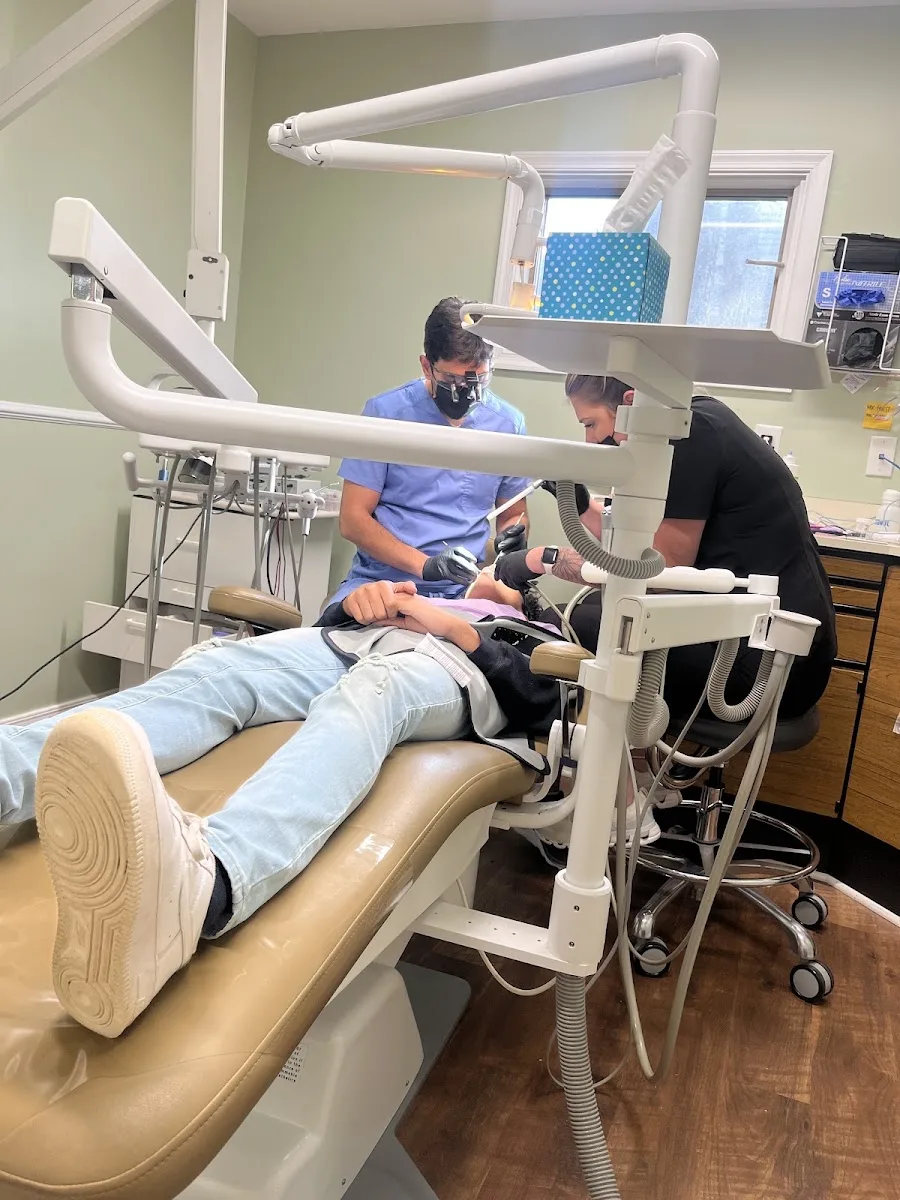
- Deep cleaning. We numb the area with our extra-gentle numbing technique, and nitrous oxide is available if you feel nervous. Depending on how much tartar there is, treatment may take more than one visit.
- Follow-up. Gums need time to heal, so we check how they responded and set your cleaning schedule together.
Keeping Gums Healthy After Treatment
Gum disease can usually be controlled, but the bacteria return whenever plaque builds up again. That is why follow-up cleanings, often more frequent than the usual twice a year, matter after a deep cleaning. Each one removes tartar before it can start a new pocket.
One Team Follows Your Gums
Treatment happens in the same office as your exams, cleanings and fillings, so one team follows your gums over time. We have served Mineral, Louisa and the Lake Anna area since 2015, and Spanish and Arabic are spoken here too.
- Deep cleanings and follow-up care done in our office
- Extra-gentle numbing, with nitrous oxide available if you feel nervous
- In network with Medicaid and many other plans
Cost and Coverage: Explained Before Treatment
The cost of a deep cleaning depends on how much of your mouth the disease has reached, which we learn at your exam. We do not post prices, but we explain the costs before any work starts. Our page on insurance and financing lists the plans we are in network with.
We are in network with Medicaid and many other plans, so call us and we will check your plan.
Ways to pay: CareCredit, Cherry, and our in-house membership plan.
Ask about your coverageGum Disease Questions
Often with a deep cleaning, also called scaling and root planing, followed by regular cleanings to keep the bacteria from returning. We do this in our office, and gum surgery is the one piece we refer out.
We numb the area first, using our extra-gentle numbing technique, with nitrous oxide available. Many patients feel pressure rather than pain, and gums may be tender for a few days afterward.
Early gum disease, called gingivitis, often clears up with a thorough cleaning and steady home care. Later-stage gum disease can usually be controlled, but bone it has already worn away does not typically grow back on its own.
No, we refer gum surgery to a specialist. If an exam shows you need it, we will tell you plainly and explain why.
It depends on your gums, but many patients come in more often than twice a year for a while. We set the schedule together after we see how your gums heal.
Plans differ in what they cover, so call (540) 894-5700 and we will check your plan. We are in network with Medicaid and many other plans.
Related care: General & Family, Tooth Extractions.